Rune
Towards a New Aphabet and then giving it up

You pick up a paper clip, bend it nervously once or twice,and it breaks—softly, like a stick of licorice.
Once a paper clip bends almost to breaking, it pops apart viciously—the way those delicately paper-wrapped, only partly-severed chopsticks do in Japanese restaurants (the rebound from the break is likely to hurt your hand every time, no matter how often you resolve to soften the blow).
Soft bend, a sudden sharp severing.
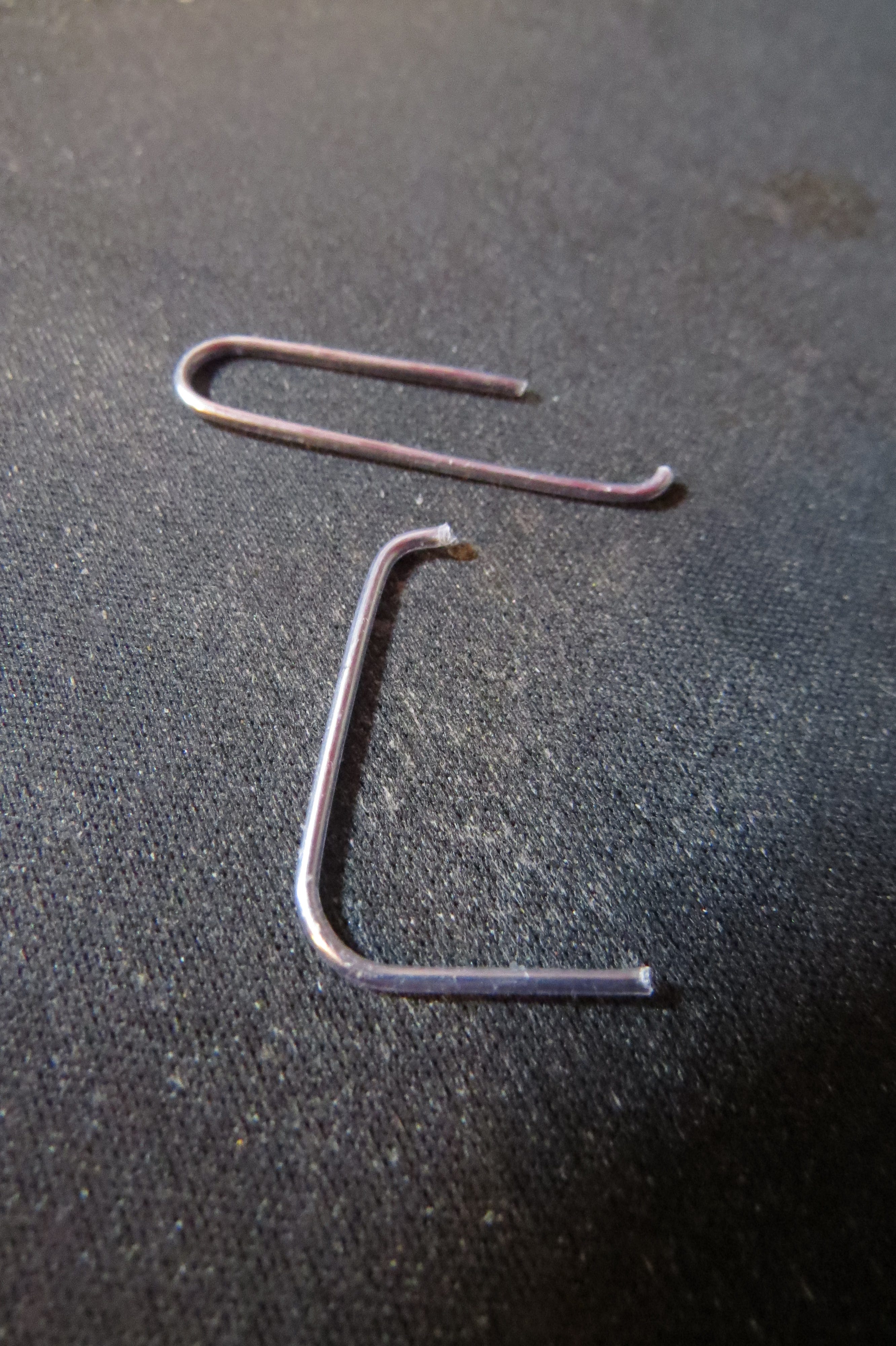
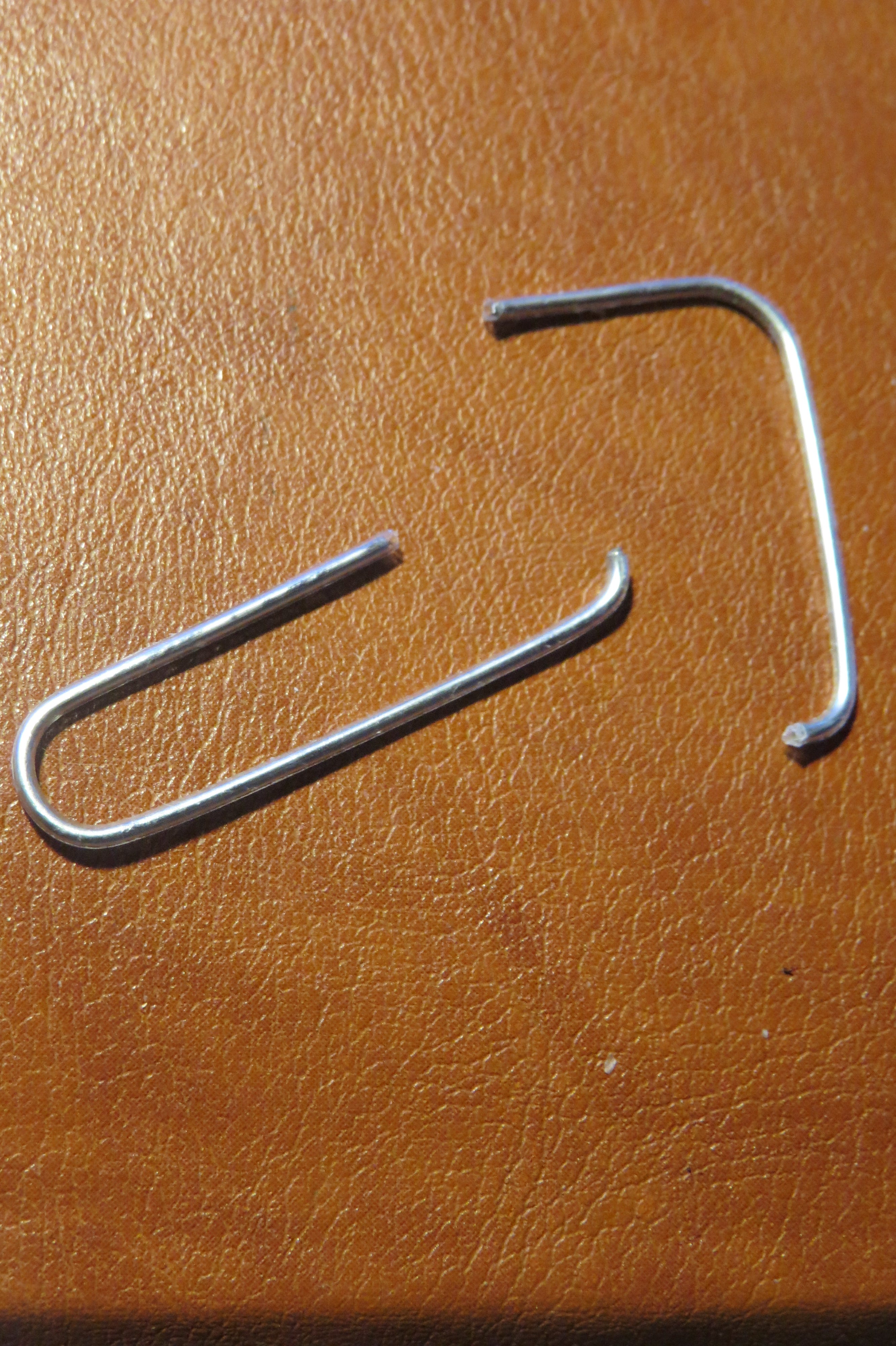
Two pieces of paperclip, each with a kind of metal wounding at the end where the ductile wire finally let go.
What kind of metal are they made from? Steel, I suppose, though no article about paperclips ever actually says so (plastic paperclips are an abomination, and don’t count as paperclips).
I dutifully google. I get astonishing stuff—doesn’t one always? I get the presumed history of the paperclip, beginning with the Gem Manufacturing Company in England in the 1880s, and with the claims of the Norwegian, Johan Vaaler, as its inventor in 1901, and with the famous Paper Clips Project of the Whitwell Middle School in Tennessee, a project wherein the eighth grade students collected six million paperclips in order to try to get some palpable vision of the horrific numbers of Jewish victims of the Holocaust—a project documented in the famous 2004 film, Paper Clips.
But what interests me is the way the lengths of broken paperclip seem to want to come together again—to be reassembled in a different, rethought configuration, so as to look like a strange, otherworldly, perhaps primitive letter or sign: a rune.
A google search of “rune” turns up too much: origins, charts, graphs inscriptions, transliterations, lore, photographs, line drawings, their “magical or divinatory use.” There is mention of the use of runic symbolism by the Nazis and by groups of Neo-Nazis: the “s” rune—or “Sig” seemed to have had something to do with the look of the double lightning-like flash of the SS (“From 1933, Schutzstaffel unit insignia displayed two Sig Runes….”).
And then there is J.R.R. Tolkien’s use of runes in The Hobbit (1937) and in the initial drafts of The Lord of the Rings.
Which seems to have led to a lot of daft, occult game-playing (“Runes are small, weightless stones that allow users to cast spells using a Magic skill. Runes can be bought from various Rune shops found across Runescape…etc., etc., etc….”), the pseudo-arcanity of which soon caused my eyes to glaze over (though I confess the phrase “small, weightless stones” continues to lodge in my mind).
No, I just thought the reassembled paperclip—no matter how I arranged its parts—seemed always to yearn towards utterance. It insisted on becoming a sign—but a sign for what, and how? I like the fact that it wants to be read but that I cannot read it.
There is a mute eloquence somewhere in the paperclip’s repositioned parts. I like their distance-hobbled muteness. I thought, momentarily, about trying to break apart a lot of paperclips and trying to devise a new alphabet with the pieces. Mercifully, I gave it up.
One of my paperclip poems:
Runes

a fallen paperclip
broke into two runic shapes

on the choppy desktop
in the light of an ancient
gooseneck lamp

like ferries crossing a river
cutting, bony